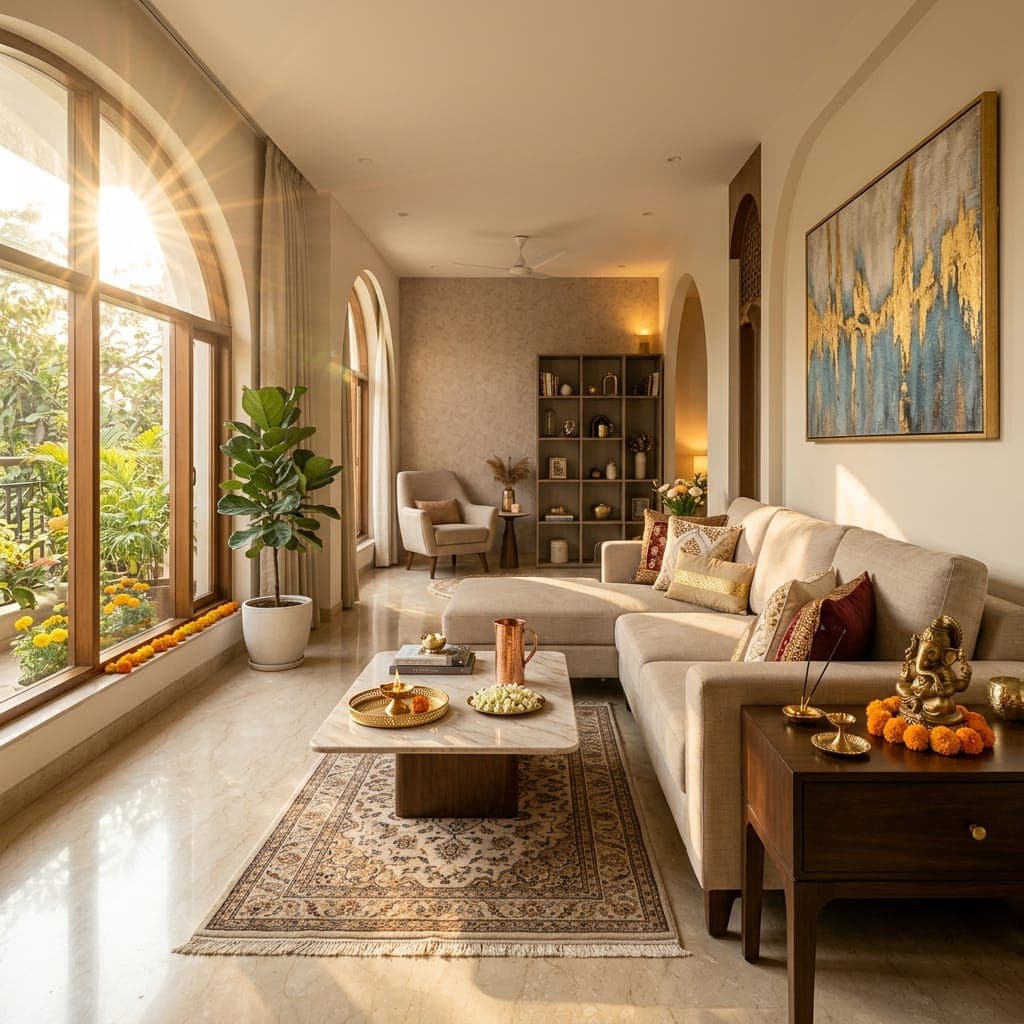
The Living Energy of Architecture
Vastu Shastra is the traditional Indian system of architecture. It treats every building as a small cosmos, shaped by the directions, the path of the Sun, and the five elements (Pancha Mahabhutas). Its sensible advice on light, ventilation and order is easy to appreciate; its claims about unseen energies are matters of tradition and belief rather than measured science.
At the heart of every home lies the Vastu Purusha Mandala—a cosmic grid where the primordial cosmic being, Vastu Purusha, lies head facing Northeast (Ishanya) and feet anchored in the Southwest (Nairutya).
The 4 Crucial Cardinal & Elemental Zones
To ensure peace and prosperity, modern homes must respect the fundamental elemental allocations:
- Ishanya (North-East - Water & Ether): The sacred mind of the house. Must remain ultra-light, clean, and clutter-free. Perfect for meditation, prayer (Pooja room), or clear study. Locating toilets or heavy storage here damages mental peace.
- Agneya (South-East - Fire Element): Governed by Agni and planet Venus. Ideal for the kitchen cooktop, electrical mains, and heating units. Water features placed in Agneya create digestive and financial turbulence.
- Nairutya (South-West - Earth Element): The seat of stability, gravity, and authority. Must be the heaviest, most elevated sector. Ideal for the master bedroom of the head of the family.
- Vayavya (North-West - Air Element): The zone of movement and guest relations. Ideal for guest bedrooms, finished product storage, and outgoing vehicles.
Non-Destructive Vastu Balancing for Modern Flats
In contemporary high-rise apartments, tearing down concrete walls or moving plumbing is often structurally impossible. Vastu practitioners suggest gentler corrections instead, such as brass or copper strips, mirrors, paint colours that match the element of a zone, and indoor plants. These are customary remedies, not engineering. Never change anything structural or electrical without a qualified professional.
For education only: astrology and ritual content on this site reflects tradition and is not medical, legal or financial advice. Read the Terms